Skip to content
Summary
Pudendal neuralgia is a type of persistent pelvic pain caused by irritation, compression or increased sensitivity of the pudendal nerve. It can affect sitting, exercise, sexual activity, and everyday life. Although it is relatively uncommon and can be difficult to diagnose, many people improve with the right combination of education, physiotherapy, lifestyle changes and, when needed, medical treatment.
At My French Physio, our Women’s and Men’s Health Physiotherapists carry out a detailed assessment to identify the factors contributing to your symptoms and create an individual treatment plan.
What is Pudendal Neuralgia?
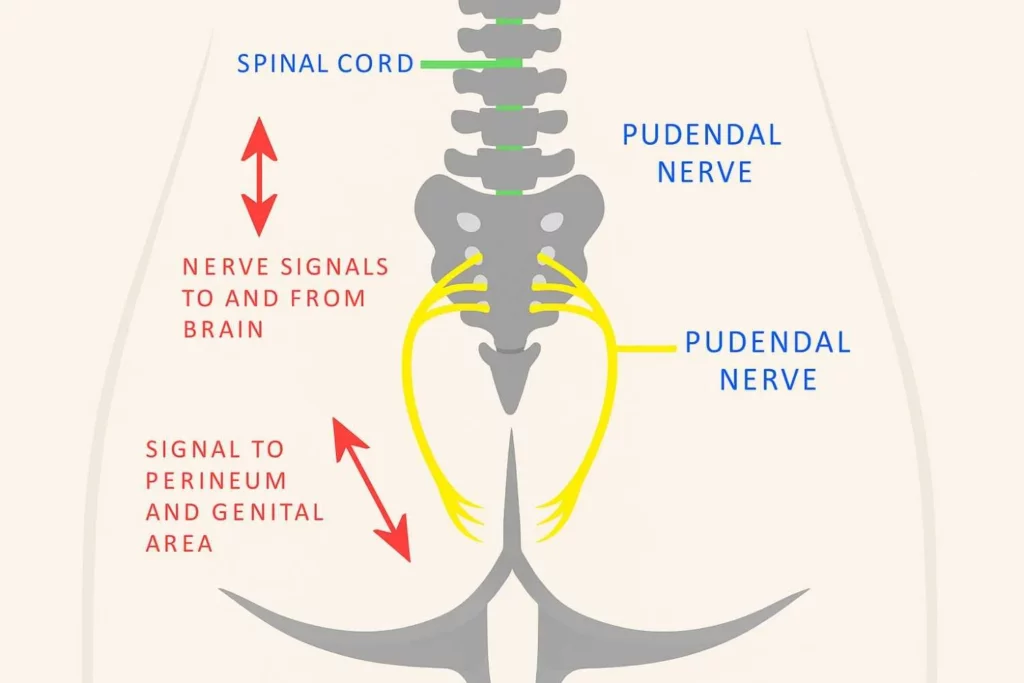
The pudendal nerve is one of the main nerves of the pelvis. It arises from the lower part of the spine (S2-S4) and supplies sensation to the:
· Perineum (the area between the genitals and anus)
· Vulva or vagina
· Penis and scrotum
· Anus and rectum
· Parts of the urethra
The nerve also helps control the pelvic floor muscles, which support the bladder, bowel and pelvic organs.
Pudendal neuralgia occurs when this nerve becomes irritated, compressed or overly sensitive. Not everyone develops symptoms for the same reason, and the condition often results from several contributing factors rather than a single cause.
Symptoms
Symptoms vary from person to person but commonly include:
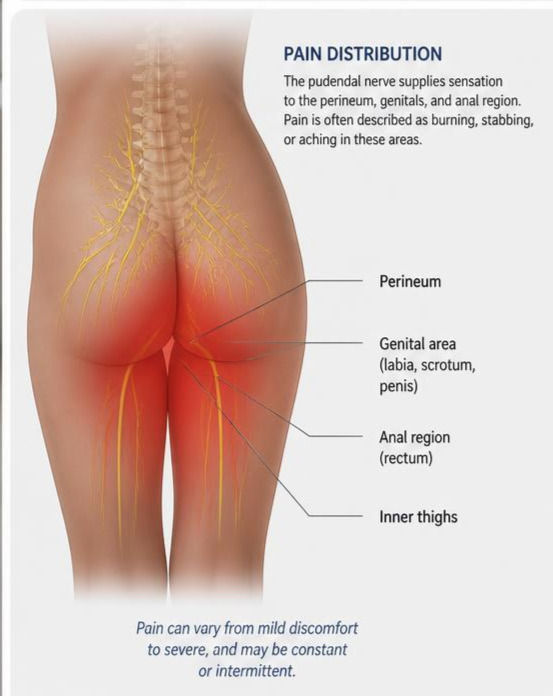
· Burning, sharp, stabbing, aching or electric shock-like pain in the pelvis
· Pain affecting the vulva, vagina, penis, scrotum, perineum, anus or rectum
· Pain that is worse when sitting and improves when standing or lying down
· Difficulty sitting for long periods
· Increased sensitivity to touch or pressure
· A feeling of fullness, swelling or a “foreign body” in the vagina or rectum despite no visible abnormality
· Pain during or after sexual intercourse
· Urinary urgency or discomfort
· Bowel discomfort or altered sensation around the pelvic area
Symptoms may come and go or become persistent over time.
Causes and Risk Factors
There is rarely one single cause of pudendal neuralgia. Common contributing factors include:
· Prolonged cycling or repeated pressure on the pelvis
· Childbirth-related injury or trauma
· Previous pelvic surgery
· Falls affecting the pelvis, hips or lower back
· Persistent pelvic floor muscle tension
· Chronic constipation and repeated straining
· Long-standing pelvic pain leading to increased sensitivity of the nervous system
Sometimes, no clear trigger can be identified. This does not mean the pain is psychological or “all in your head”. Persistent pain is real and deserves appropriate assessment and treatment.
What Pudendal Neuralgia is NOT
Many conditions can cause similar symptoms. Because of this, a thorough assessment is essential before diagnosing pudendal neuralgia.
Other possible causes of pelvic pain include:
· Pelvic floor muscle dysfunction without nerve involvement
· Bladder pain syndrome (interstitial cystitis)
· Endometriosis
· Vulvodynia
· Prostatitis or chronic pelvic pain syndrome
· Haemorrhoids or anal fissures
· Hip or lower back conditions referring pain into the pelvis
· Gynaecological, urological or colorectal conditions
Physiotherapists consider all of these possibilities during assessment and refer for further medical investigation if needed.
Red Flags: When Should You Seek Medical Help?
Pelvic pain should always be assessed if it is severe, persistent or unexplained.
Seek urgent medical attention if you develop:
· New loss of bladder or bowel control
· Numbness around the saddle area (the area that would touch a bicycle saddle)
· Progressive weakness in the legs
· Severe pain following major trauma
· Fever, unexplained weight loss or feeling generally unwell alongside pelvic pain
· Blood in the urine or stool, or unexplained vaginal bleeding (unless previously investigated)
· Severe pain during pregnancy or after childbirth that is worsening
These symptoms may indicate another condition requiring urgent medical assessment.
How is Pudendal Neuralgia Diagnosed?
There is no single test that confirms pudendal neuralgia.
Diagnosis is based on:
· A detailed discussion about your symptoms
· Your medical history
· The pattern of your pain
· A physical examination
At My French Physio, your physiotherapist may assess:
· Your posture
· The lower back
· The hips and pelvis
· Movement patterns
· Muscle flexibility
· Pelvic floor function
With your informed consent, an internal pelvic floor examination may be recommended to assess muscle tone, coordination and tenderness. This examination is never compulsory and will only be performed if appropriate.
In some cases, your GP or specialist may arrange additional investigations to exclude other conditions.
How Physiotherapy Can Help
Physiotherapy is often an important part of managing pudendal neuralgia and is tailored to each individual.
Rather than focusing only on the painful area, physiotherapists identify all the factors that may be contributing to ongoing nerve irritation.
One common finding is an overactive pelvic floor. Many people assume pelvic floor muscles are weak, but in pudendal neuralgia they are often too tight and unable to relax properly. In these cases, strengthening exercises alone may increase symptoms.
Treatment may include:
Education
Understanding your condition helps reduce fear and improves confidence in managing symptoms.
We explain:
· How the pudendal nerve works
· Why symptoms occur
· Which activities may aggravate symptoms
· How recovery usually progresses
Pelvic Floor Relaxation
Treatment may include:
· Breathing exercises
· Pelvic floor relaxation techniques
· Gentle stretching
· Strategies to reduce unnecessary muscle tension
Manual Therapy
Where appropriate, hands-on treatment may help reduce muscle tightness and improve movement around the pelvis.
Treatment may involve:
· External soft tissue techniques
· Internal pelvic floor treatment (only with your informed consent)
· Joint and soft tissue mobilisation where clinically indicated
Movement and Exercise
Gentle movement helps restore normal function without overloading sensitive tissues.
Exercises may focus on:
· Hip mobility
· Lower back movement
· Core control
· General flexibility
· Gradual return to activity
Exercise programmes are progressed according to your symptoms and goals.
Lifestyle and Postural Advice
Simple changes can significantly reduce pressure on the pudendal nerve.
These may include:
· Avoiding prolonged sitting where possible
· Taking regular movement breaks
· Adjusting sitting posture
· Using a cut-out or pressure-relieving cushion
· Modifying cycling or other aggravating activities
Pain Management
Persistent nerve pain often involves increased sensitivity within the nervous system.
Physiotherapy aims to gradually reduce this sensitivity through:
· Graded activity
· Pacing strategies
· Relaxation techniques
· Gradual exposure to movement
· Improving confidence in normal activities
Exercises
Exercises should always be tailored to the individual assessment.
Depending on your symptoms, your physiotherapist may recommend:
· Diaphragmatic breathing
· Pelvic floor relaxation exercises
· Gentle hip stretches
· Lumbar mobility exercises
· Walking programmes
· Graded return to exercise
Important: Pelvic floor strengthening (often called Kegel exercises) is not appropriate for everyone. If your pelvic floor muscles are already overactive or tight, strengthening them may worsen symptoms. A proper assessment is recommended before beginning pelvic floor exercises.
Recovery Timeline
Recovery varies considerably because symptoms often develop over months or years.
Many people notice gradual improvement over several weeks or months once the contributing factors are addressed.
Recovery depends on:
· How long symptoms have been present
· The underlying causes
· The degree of nerve sensitivity
· Adherence to treatment and activity modification
· Whether additional medical management is required
Improvement is often gradual rather than immediate.
Prevention and Self-Management
Although not every case can be prevented, the following strategies may help reduce flare-ups:
· Avoid prolonged pressure on the pelvic area
· Take regular breaks from sitting
· Manage constipation and avoid excessive straining
· Stay physically active within comfortable limits
· Learn to relax rather than constantly brace the pelvic floor muscles
· Follow your physiotherapy programme consistently
· Return gradually to cycling or other high-pressure activities if advised
Small changes performed consistently often make a meaningful difference.
Frequently Asked Questions
Is pudendal neuralgia permanent?
Not necessarily. Many people improve with appropriate treatment, although recovery may take time.
Can physiotherapy cure pudendal neuralgia?
Physiotherapy can help reduce symptoms, improve function and address contributing factors. Outcomes vary between individuals, and some people benefit from additional medical treatments as part of a multidisciplinary approach.
Should I stop exercising?
Usually not. Remaining active is often beneficial, but activities may need to be modified temporarily to avoid aggravating symptoms.
Are Kegel exercises helpful?
Not always. If the pelvic floor muscles are already tight or overactive, strengthening exercises may worsen symptoms. Assessment by a pelvic health physiotherapist is recommended before starting pelvic floor exercises.
Why is sitting so painful?
Sitting increases pressure around the area supplied by the pudendal nerve, which may aggravate symptoms in some people.
Can stress make symptoms worse?
Stress does not cause pudendal neuralgia, but it can increase muscle tension and nervous system sensitivity, making symptoms feel worse.
Will I need a scan?
Not necessarily. Imaging is sometimes used to rule out other conditions, but there is no single scan that confirms pudendal neuralgia.
Will I need medication?
Some people benefit from medication prescribed by their GP or specialist to help manage nerve pain. Your healthcare team will advise whether this is appropriate.
A Multidisciplinary Approach
Some people recover with physiotherapy alone, while others benefit from input from several healthcare professionals.
Depending on your symptoms, your physiotherapist may work alongside your:
· GP
· Pain specialist
· Gynaecologist
· Urologist
· Colorectal consultant
Medical treatments such as nerve pain medication or image-guided injections may sometimes be considered. Physiotherapy complements these treatments by improving movement, reducing muscle tension and helping you return to normal activities.
Conclusion
Pudendal neuralgia is a complex but treatable cause of persistent pelvic pain. Because its symptoms overlap with many other pelvic conditions, obtaining an accurate assessment is essential.
Physiotherapy aims to identify the factors contributing to your symptoms rather than simply treating the painful area. Through education, pelvic floor rehabilitation, movement, lifestyle advice and a personalised treatment programme, many people achieve meaningful improvements in pain, function and quality of life.
If you have ongoing pelvic pain, particularly pain that worsens with sitting or affects your daily activities, an assessment with a pelvic health physiotherapist can help determine whether pudendal neuralgia or another condition may be contributing to your symptoms and guide you towards the most appropriate treatment.